
» Beyond the Beauty Shop: Ordinary Spaces, Extraordinary Change
This post is written by Veer Mehta, Avery’s Mellon Project Archivist.
When engaging with the broad scope of the Civil Rights Movement, the conversation can often be directed towards public demonstrations, judicial hearings, and national heroes for the cause. However, much of the movement’s success was built through the everyday efforts of local organizers and community members whose work might not receive the same recognition. In Charleston and the Lowcountry, Bernice Robinson was a key example. A beautician, educator, and civil rights organizer, Robinson played an instrumental role in expanding educational opportunities and voter registration among African Americans in the Lowcountry. Her work, particularly through Citizenship Schools, demonstrates how community relationships and the leadership of Black women helped shape the movement as a whole.
Born in Charleston in 1914, Robinson developed her independence fairly early in life. Upon finishing her primary education at Burke Industrial School, she moved to New York City, eventually working in garment factories and attending cosmetology school. She returned to Charleston in 1947 to care for her parents and working as a beautician for clients in her home on Dewey St. Eventually she opened a beauty shop downtown but it was clear that political activism became a passion of hers and she expressed this creativity through joining the local branch of the National Association for the Advancement of Colored People (NAACP), participating in membership activities and voter-registration efforts. Her work as a self-employed beautician provided her with economic independence which allowed her to become involved in civil rights organizing without relying on employment within the white community.
Robinson also strengthened her relationship with her first cousin on her mother’s side, Septima P. Clark. Clark and Robinson deeply stressed the importance of adult education and understood that literacy was directly connected to political participation. In the segregated South, literacy tests and other discriminatory practices were routinely used to prevent African Americans from registering to vote. Through the work with the Highlander Folk School in Tennessee, Clark became involved in developing educational opportunities that could help address these barriers. She encouraged Robinson to attend a Highlander workshop, where she would encounter other activists including Esau Jenkins, a Johns Island community leader who shared Clark’s commitment to education and voter empowerment.
In 1957, with support from Highlander and its main benefactor, the Field Foundation, Jenkins helped establish the first Citizenship School at the Progressive Club on Johns Island. Robinson was selected as its first teacher. Although she did not have formal teaching credentials, her understanding of the community, along with the Gullah dialect, made her an effective leader. Rather than relying on a traditional classroom curriculum, Robinson tailored lessons to the everyday experiences of her students. Reading, writing, and arithmetic were taught through practical exercises involving grocery shopping, farming, transportation, and other daily activities. The objective was not simply to teach literacy, but to equip students with the skills necessary to navigate a society that deliberately restricted their opportunities.
The results were undeniable. In about five months of instruction, all fourteen students in Robinson’s first class could read and write their names and had obtained voter-registration certificates. The success of the Johns Island school encouraged the establishment of additional Citizenship Schools on Wadmalaw and Edisto Islands. It was clear that she maintained a great report with local community members, which is exemplified in the letter from Myles Horton found below. Robinson also helped recruit and train teachers who would carry the program into other communities. Eventually, the initiative expanded throughout the South and became part of the Southern Christian Leadership Conference’s (SCLC) Citizenship Education Program.
Robinson’s story shows the importance of black spaces that existed outside traditional political and educational institutions. Her experience as a beautician connected her to the community through virtues of friendship and camaraderie. Beauty shops and other neighborhood businesses could serve as places where African Americans exchanged information, discussed local concerns, and build relationships. Robinson’s ability to connect her community involvement with her educational and organizing work reflects how the Civil Rights Movement depended on these everyday networks. The partnership between Robinson and Clark is equally significant, demonstrating how Black women encouraged and created opportunities for one another through shared commitments to social revolutions.
The Avery Research Center’s Bernice Robinson Papers (AMN 1018) provides an opportunity to explore this history through correspondence, photographs, speeches, oral histories, and materials documenting her work with the Highlander Folk School, Citizenship Schools, and the SCLC. These records preserve the experiences of an organizer whose contributions extended well beyond the classroom. Robinson continued working in community development and social welfare programs, and in 1972, became the first African American woman to run for the South Carolina House of Representatives.
Preserving Robinson’s story is important because it broadens our understanding of how the Civil Rights Movement developed in small communities. Her life reminds us that meaningful social activism does not only happen through politicized leaders or nationally recognized events. It’s more often produced through personal relationships, community spaces, and individuals who recognize the needs of those around them. Through her work as a beautician, educator, and organizer, Bernice Robinson proved that education was the greatest form of empowerment.
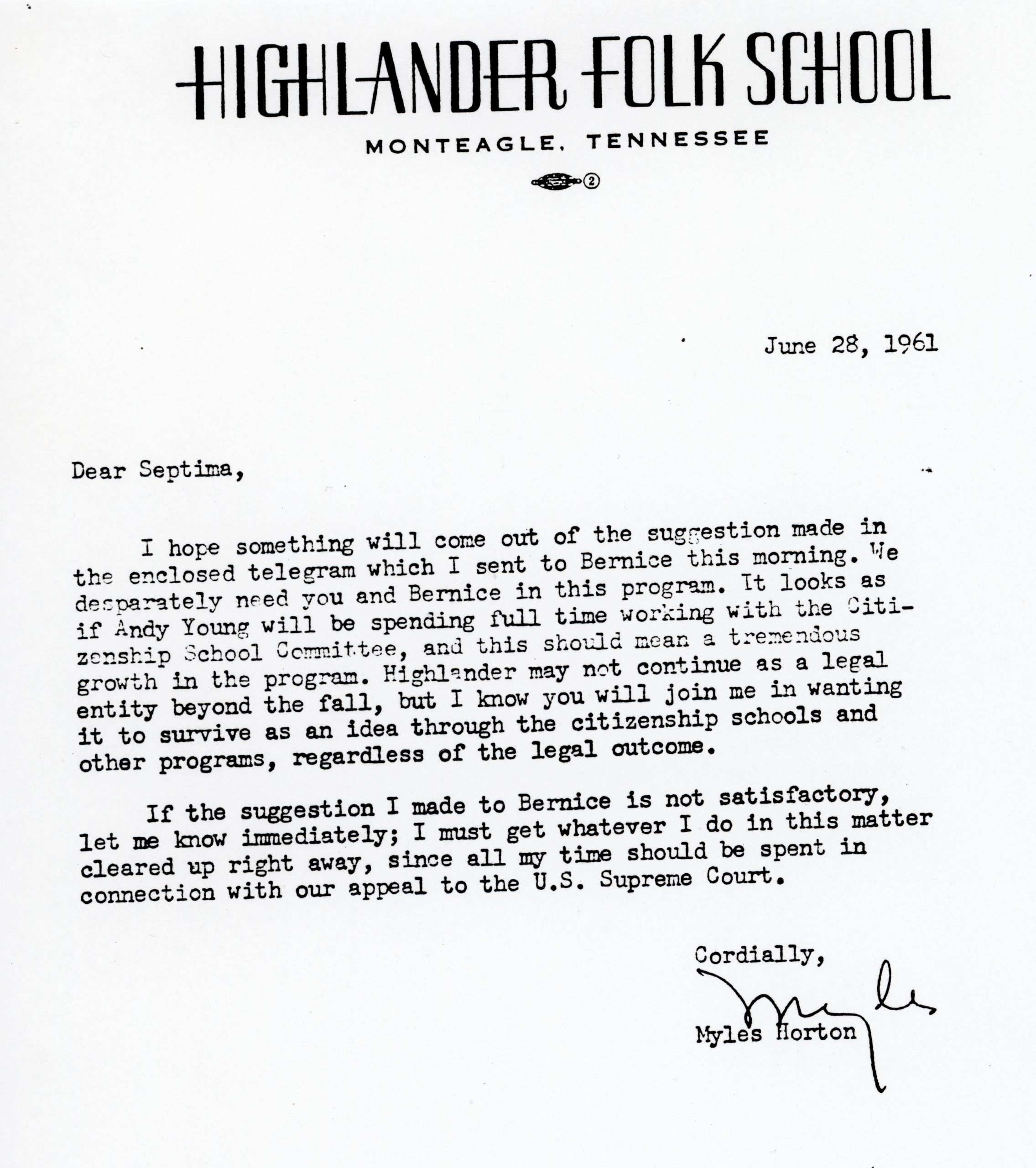
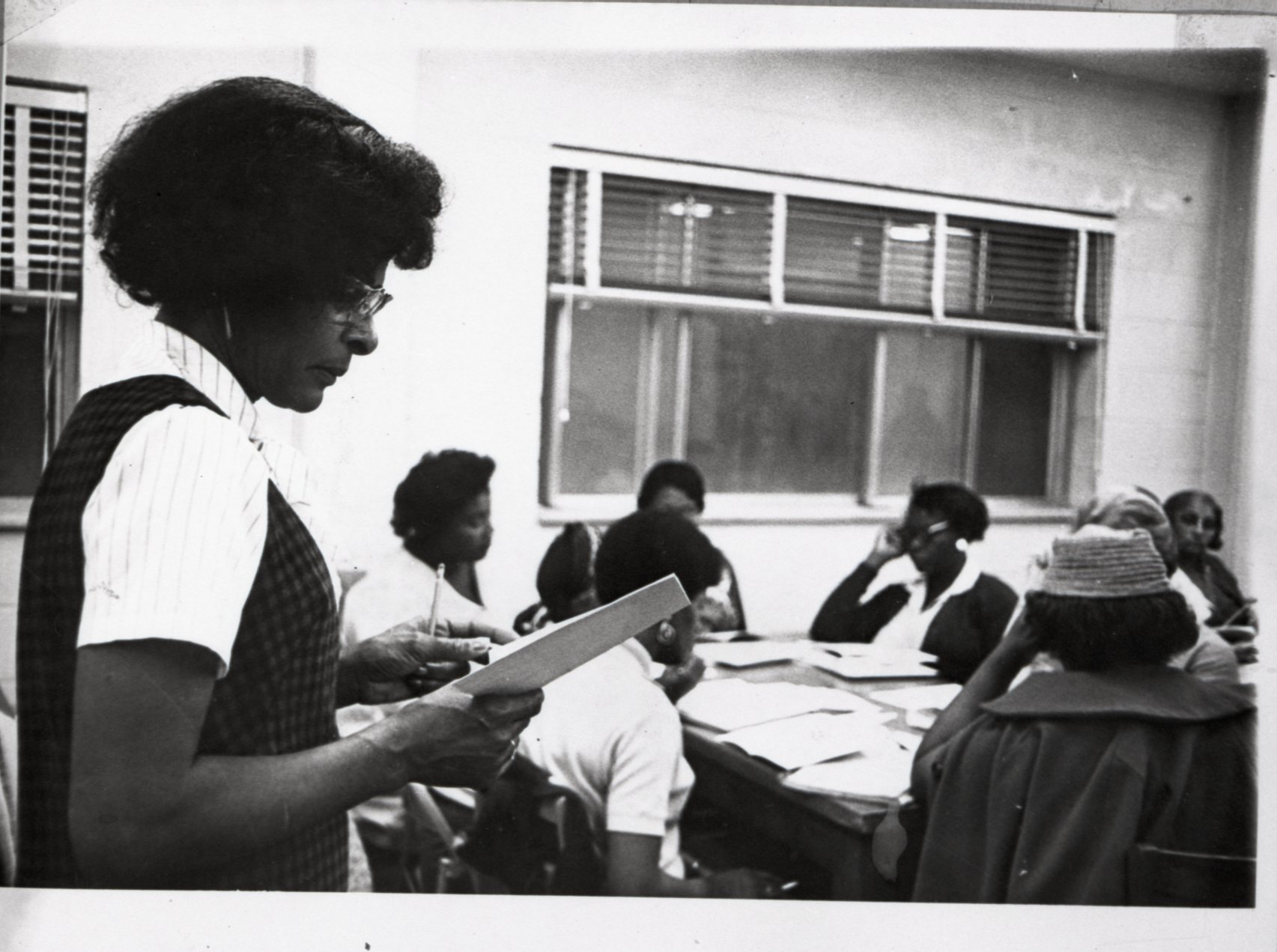
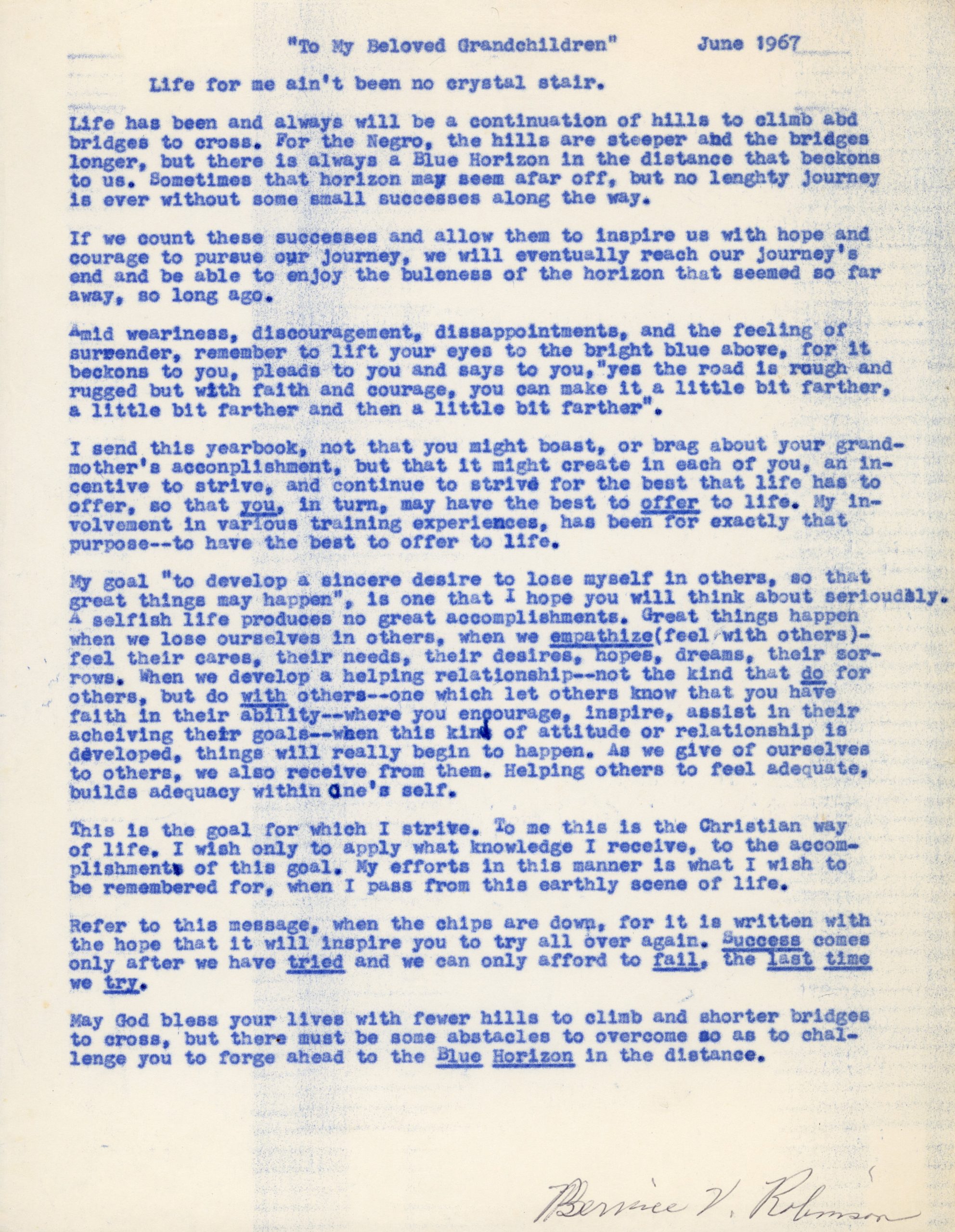
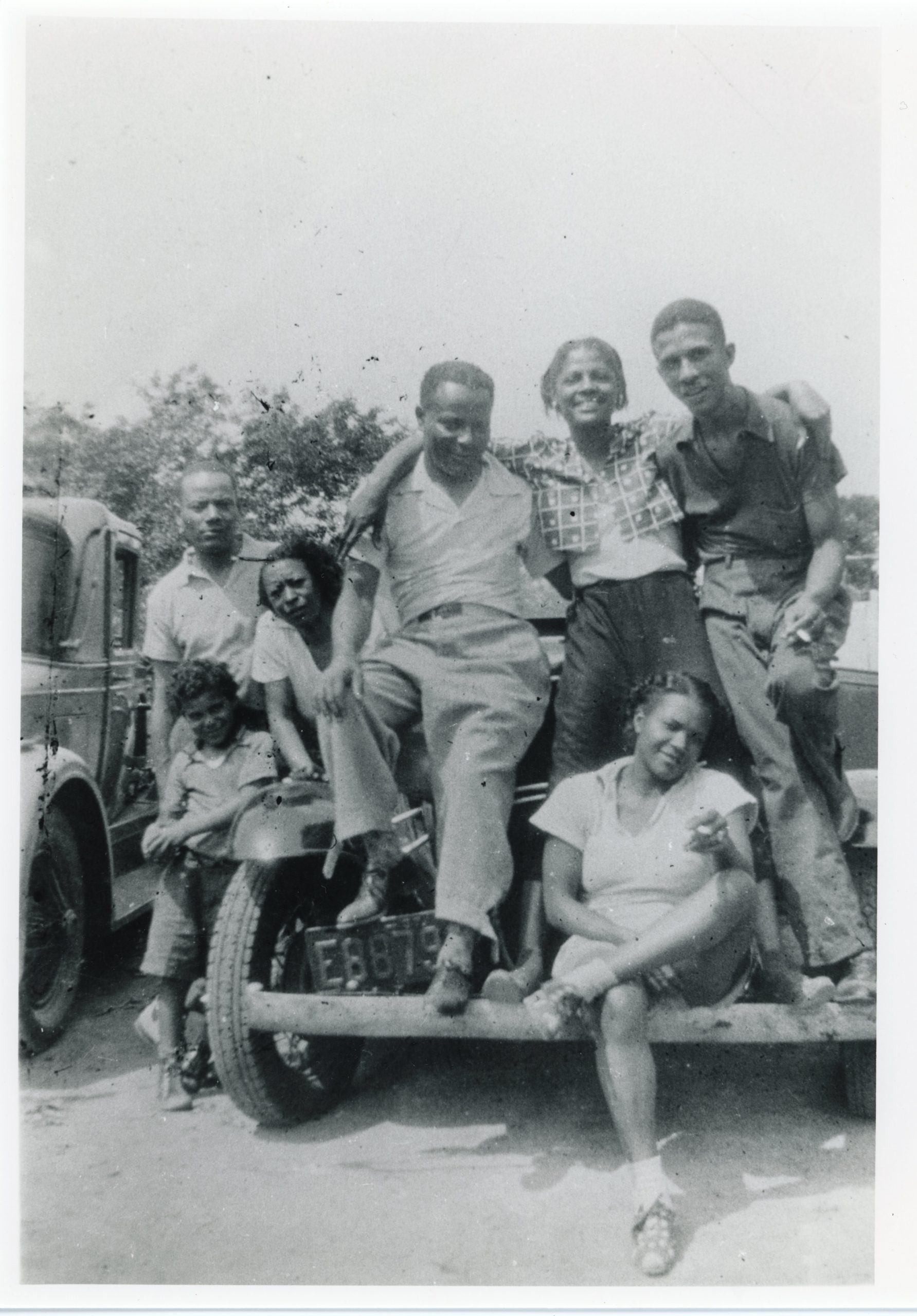
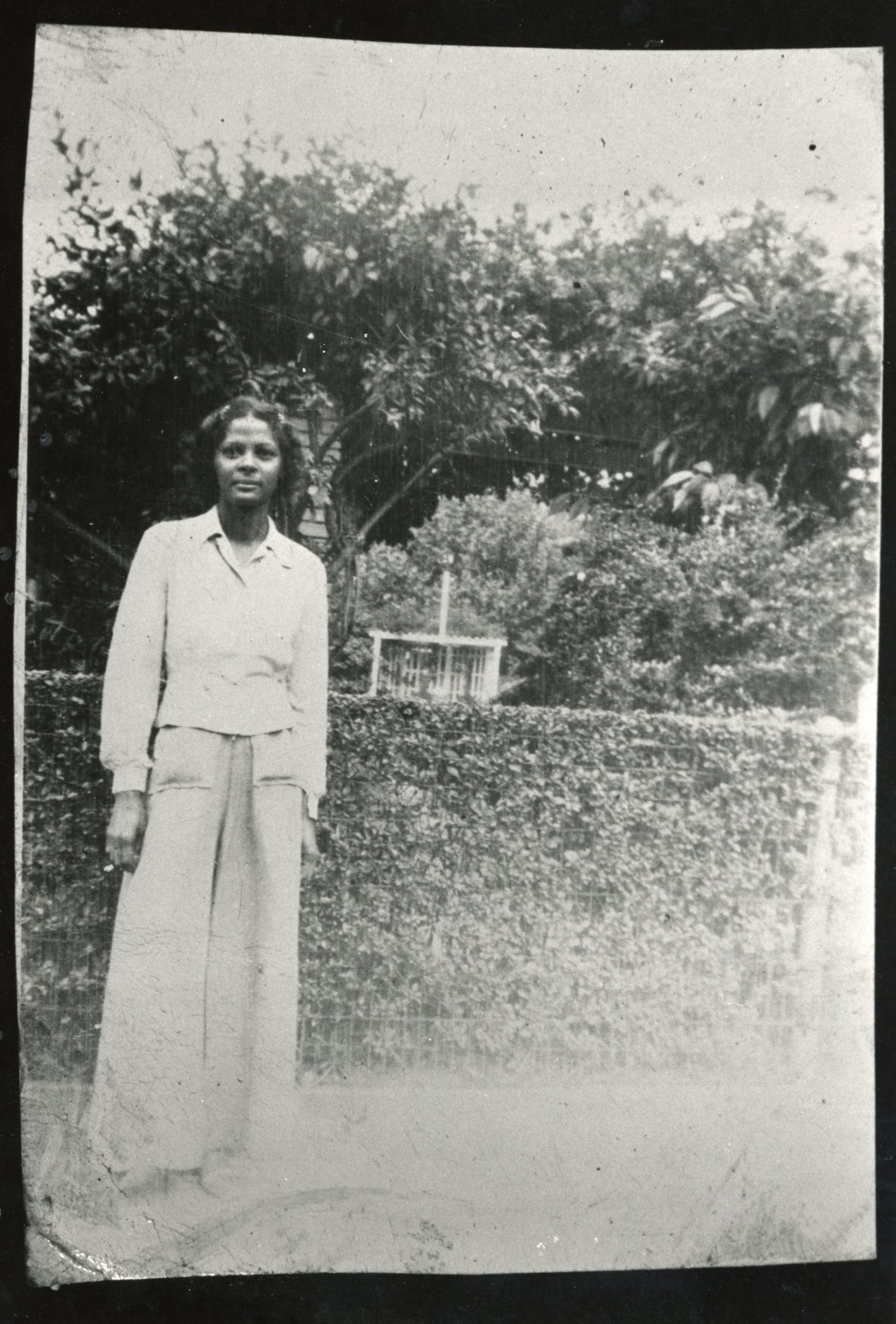
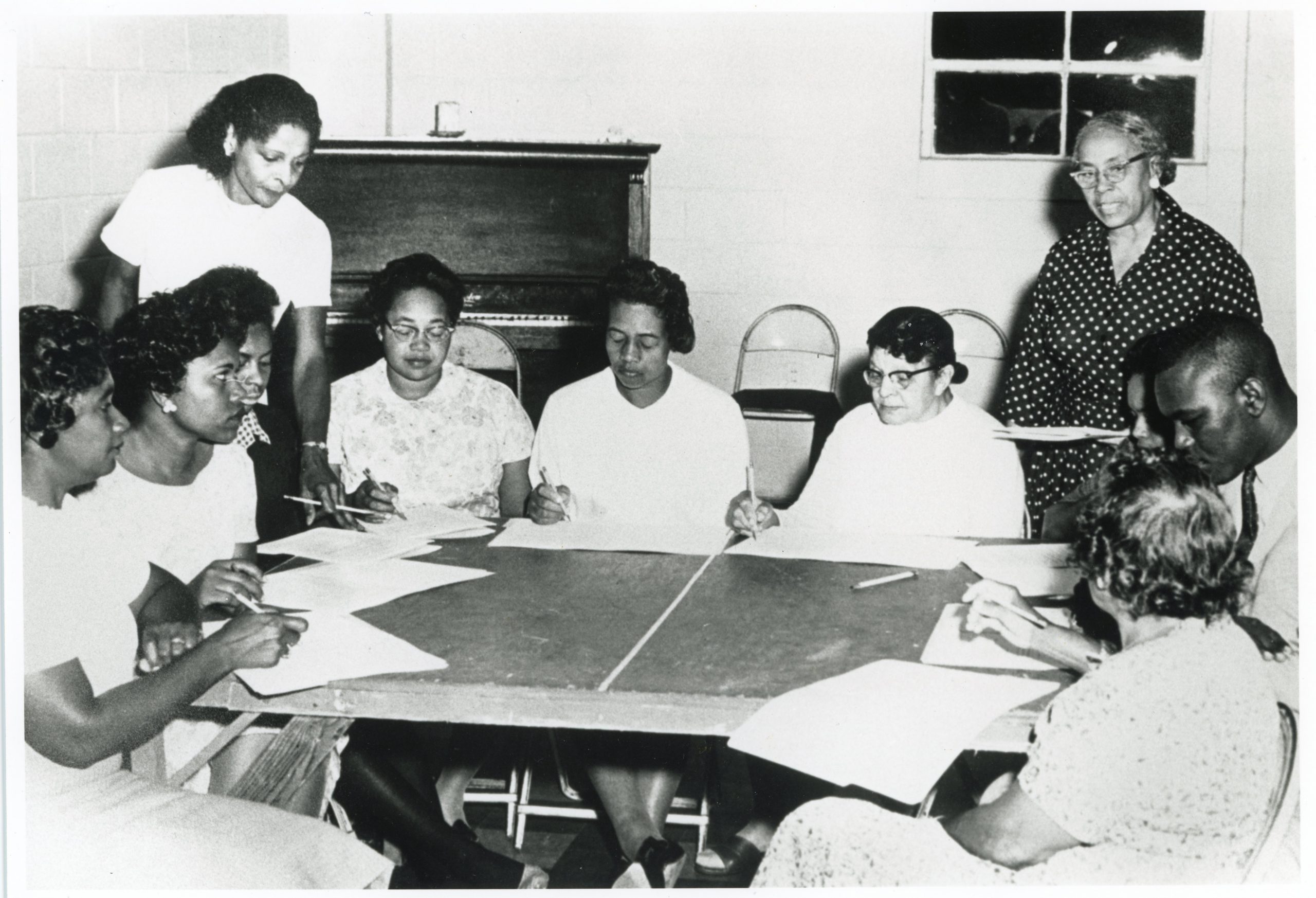
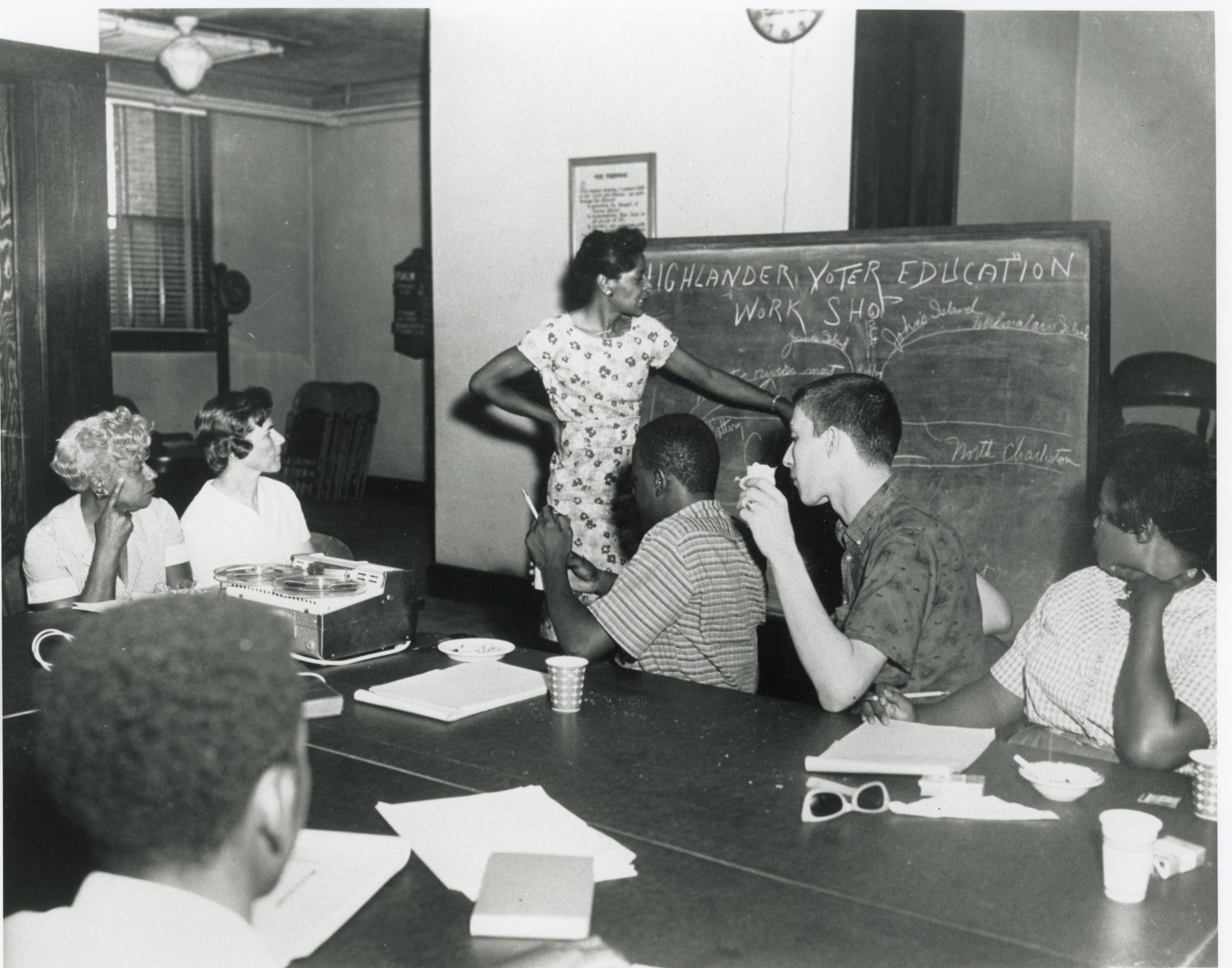
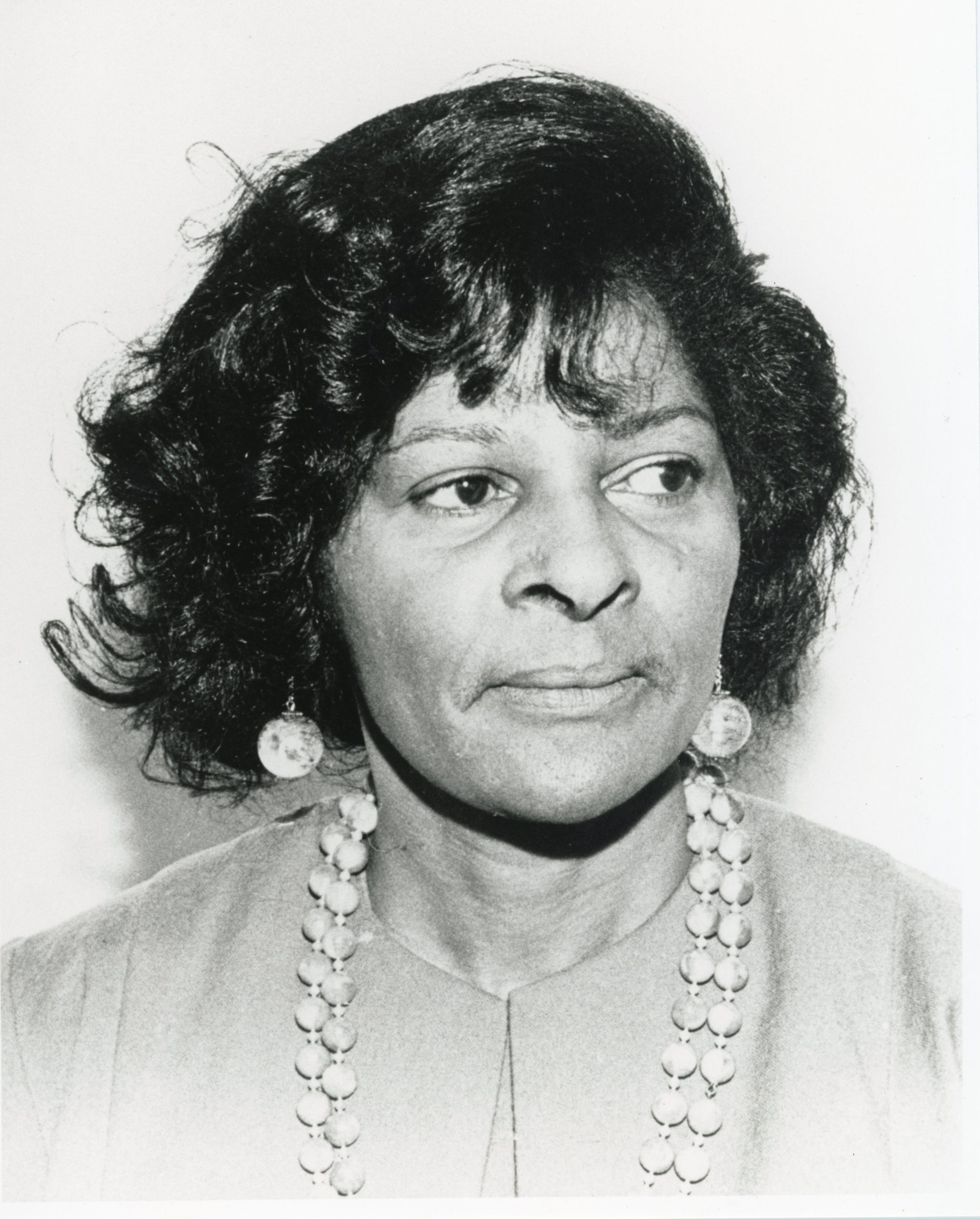
Image Citations:
- Letter from Myles Horton to Septima Clark. June 28, 1961. AMN 1000 Septima P. Clark papers, Box 7 Folder 3. Avery Research Center, College of Charleston, Charleston, SC, USA.
- Photograph of Bernice Robinson at the Georgia SCLC conference, 1961. AMN 1000 Septima P. Clark papers, Box 16 Folder 10. Avery Research Center, College of Charleston, Charleston, SC, USA.
- Essay “To My Beloved Grandchildren” by Bernice V. Robinson, June 1967. AMN 1000 Septima P. Clark papers, Box 4 Folder 20. Avery Research Center, College of Charleston, Charleston, SC, USA.
- Photograph of Bernice Robinson and family, c. 1940’s. AMN 1112 Avery Photograph Collection, Folder 10-41. Avery Research Center, College of Charleston, Charleston, SC, USA.
- Photograph of Bernice Robinson, c. 1940’s. AMN 1112 Avery Photograph Collection, Folder 10-41. Avery Research Center, College of Charleston, Charleston, SC, USA.
- Photograph of Bernice Robinson and Septima Clark teaching, c. 1960’s. AMN 1112 Avery Photograph Collection, Folder 10-41. Avery Research Center, College of Charleston, Charleston, SC, USA.
- Photograph of Bernice Robinson teaching at the Highlander Voter Education Workshop, c. 1960’s. AMN 1112 Avery Photograph Collection, Folder 10-41. Avery Research Center, College of Charleston, Charleston, SC, USA.
- Photograph headshot of Bernice Robinson, c. 1970’s. AMN 1112 Avery Photograph Collection, Folder 10-41. Avery Research Center, College of Charleston, Charleston, SC, USA.
Additional Research:
- Bernice Robinson papers, AMN 1018. Avery Research Center Finding Aid:
https://findingaids.library.cofc.edu/repositories/3/resources/186 - Bernice Robinson papers, 1920-1989, Lowcountry Digital Library collection:
https://lcdl.library.cofc.edu/lcdl/?f%5Bcollection_titleInfo_title_facet%5D%5B%5D=Bernice+Robinson+Papers%2C+1920-1989&q=bernice+robinson